Huawei Mate Se Vs Moto G5 Plus Review
48MP principal camera, ultrawide and macro in tow
The Moto G 5G Plus employs the pop 48MP Quad-Bayer sensor mean to shoot in 12MP pixel-binned way. It is reasonably large 1/two"-type sensor and sits behind a fast f/i.7 lens. The ultrawide camera, on the other hand, does 8MP stills with 118-caste field of view and f/2.2 discontinuity.
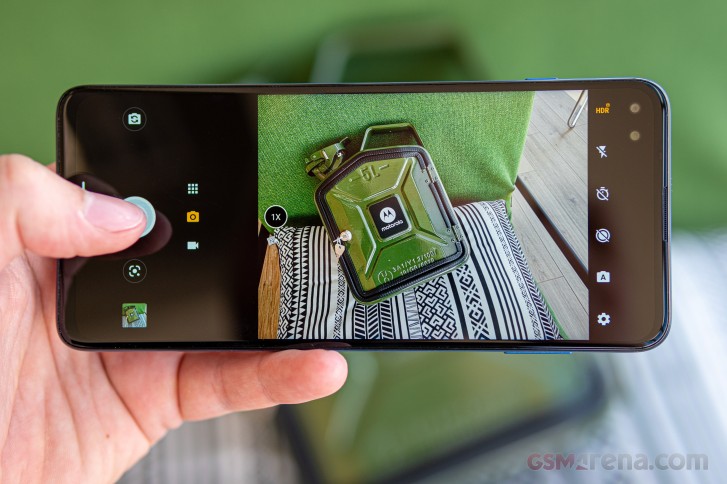
The third camera on the module is 5MP f/2.2 dedicated macro, which is a stride up from the more common 2MP macro cameras. Mostly because it has autofocus, which makes snapping macros a lot easier.
Lastly, we have the 2MP sensor, which is supposed to get together depth information for the portrait shots.
And on the front end, we have 2 units - the 16MP main one has f/2.0 aperture, while the 8MP ultrawide unit has f/2.2 lens.
Camera menus
Motorola's default photographic camera app is quite different from almost of its rivals. Swiping left and correct cycles through only three modes - the default photograph fashion, video recording, and the last used special mode. Tapping on the squares icon lets yous access the total list of camera modes including manual, portrait and night.


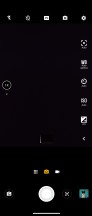



Moto Camera
The familiar settings icon in the upper-right corner of the viewfinder lets y'all adjust video resolution, aspect ratio settings, etc.
Daylight samples
Main photographic camera
The main camera performs well during the mean solar day. Outdoor shots have good detail, great dynamic range, punchy colors and have that contrast-y overall feel and look. There'southward some corner softness and some noise in the shadows, just the overall results are certainly pleasing.







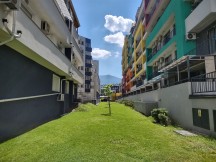

Main camera daylight samples
Ultra-wide camera
The ultrawide cameras has nowhere virtually the same resolving power every bit the main ane - images are rather soft throughout - but at least it matches its skillful color rendition in favorable light conditions and has decent dynamic range.





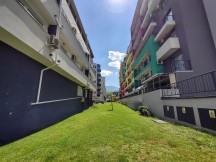
Ultra-wide daylight samples
Depression-light samples
Primary camera
When calorie-free fades the prototype quality deteriorates speedily. The low-light samples are frequently underexposed in adition to lacking detail and having a fair amount of noise. Nosotros suspect an overly aggressive, only non particularly efficient racket reduction algorithm is at to the lowest degree partially to arraign hither, giving darker parts of the images the watercolor upshot.








Primary camera low-light samples
The Night Vision improves the quality significantly - it does a amend chore with the exposure and pictures come up out way more detailed. There's more racket too, farther backing the noise suppression algorithm bug theory. The sharpening part is maybe a little flake over the height, causing notable halos.








Main photographic camera Dark Vision samples
Despite its less than perfect processing, we'd recommend using the nighttime way whenever the scene allows it.
Ultra-wide
As was to be expected, the ultrawide camera isn't much use in the dark, producing grainy and soft images with express dynamic range and washed out colors. It's got no Nighttime mode too, making its use in limited lighting an emergency-merely affair.





Ultra-broad low-low-cal samples
And here'due south a comparison betwixt the Moto G 5G Plus and some of its rivals in our photo compare tool.

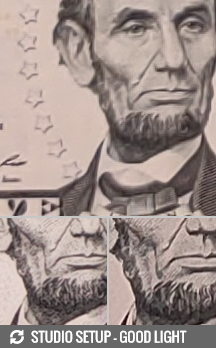
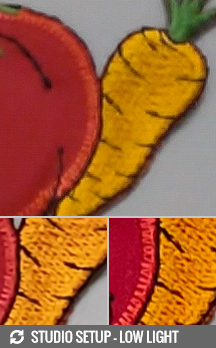
Moto K 5G Plus vs Xiaomi Mi 10 Calorie-free 5G and the Realme six Pro in our Photo compare tool
Macro samples
The 5MP camera is definitely a footstep up from the more popular 2MP sensor. The AF helps a lot too since you don't need to move your phone back and forward to become the subject field in focus. Paradigm quality is far from what the main camera tin can deliver, just the close up upshot will certainly help you produce some interesting shots.






Macro samples
Portraits
The portrait shots lack sharpness and dynamic range, but accept well rendered skin tones and very skillful edge detection. Noise levels are relatively loftier in annihilation just super brilliant lighting. That's why nosotros recommend doing portraits outside or in a well-lit room if the image quality is important.






Portrait samples
Selfies
The HDR on the selfies seems more than than competent as it keeps the subject's face well-exposed fifty-fifty in more challenging lighting conditions without clipping the bright background too. Sharpness and detail are well-preserved in the process while colors seem to be authentic plenty. The ultrawide camera is noticeably softer with inferior dynamic range and colors look bleaker. Noise starts to creep in when light begins to drop.






Selfies: Normal • Ultra-wide • Normal • Ultra-wide • Normal • Ultra-broad • Normal
The portrait mode is a bit rough around the edges with the subject area separation failing even when the background isn't especially complex.



Portrait selfies
Video recording
The handset supports up to 4K video recording and it tin be stabilized too. For added dramatic effect, you can choose to tape in cinematic 21:nine aspect ratio. The same can be done with the 1080p videos while the standard 16:nine attribute ratio allows you to shoot in 60fps.
We shot one 2160p video without EIS and nosotros really like what nosotros see. Colors are punchy, dissimilarity is good, we can't spot racket, dynamic range is wide and sharpness is not bad. Nothing to complain about, really, especially given the price tag of the phone.
Strangely plenty, flipping the stabilization switch, will considerably subtract the bitrate, which leads to some loss of fine detail, although the overall quality is still pretty good. It might be a bigger issue in more dynamic screens as well, so nosotros'd refrain from using EIS unless absolutely neccessary.
On the upside the EIS works very well and then at least you are getting something in return for the drop in image quality.
The 1080p fashion is all virtually saving space and it's rather compressed, defective in item and generally having unimpressive quality.
So once again the 1080p also lets you utilise the ultrawide camera, which lacks the resolution to do 4K clips. The ultrawide videos can give you an interesting alternative perspective, but are certainly the to the lowest degree impressive looking of the agglomeration.
You can take a wait at how the Moto M 5G Plus stacks against the contest in our video compare tool.
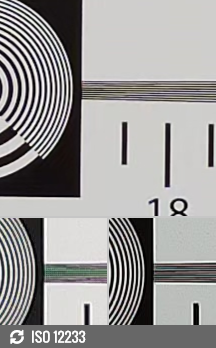

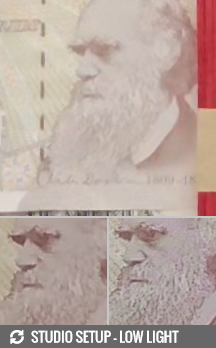
2160p: Moto M 5G Plus vs Xiaomi Mi x Lite 5G and the Realme 6 Pro in our Video compare tool
Source: https://www.gsmarena.com/motorola_moto_g_5g_plus-review-2141p5.php
0 Response to "Huawei Mate Se Vs Moto G5 Plus Review"
Enviar um comentário