Iris Types And Varieties - Different Iris Types To Grow In The Garden
It might surprise you how many iris varieties at that place are. The iris flower has always enchanted poets and people of sensibility for centuries. But this is more than than an ornamental institute. In almost every culture where the iris bloom grew, people accept constitute unlike uses for it. Most notable of those are medicinal benefits where the roots were used to save coughs and as a purgative element. Traditional medicine nonetheless recommends iris root tea as a handling for many digestive problems.
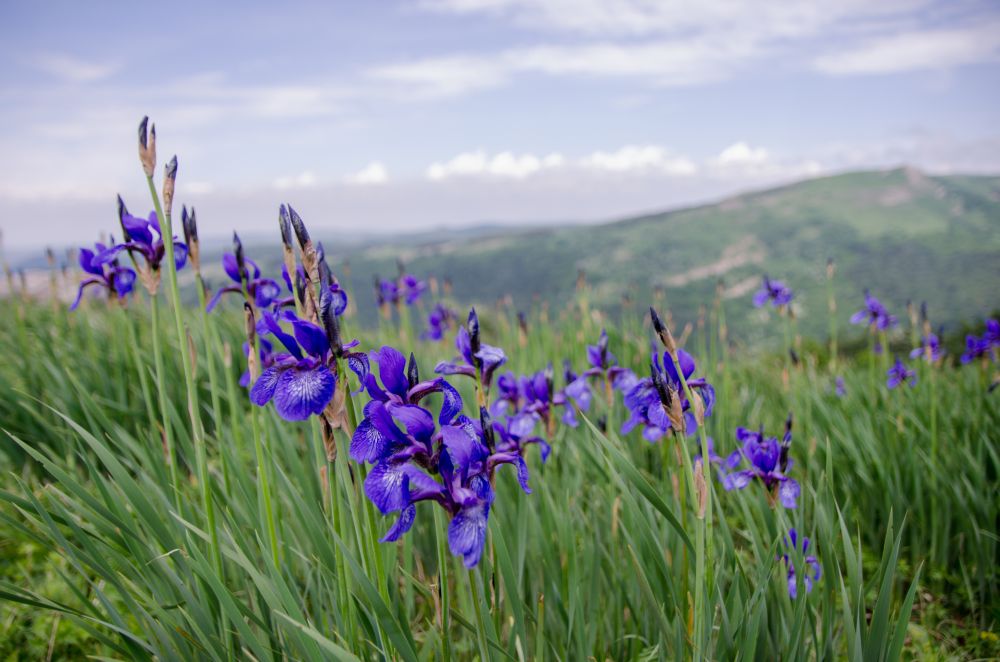
Merely you don't have to exist into homeopathy to grow the fragile iris plant. The ornamental and landscaping uses of the flower are abundant. And with then many varieties to select from, the question becomes which iris diverseness to grow.
We simplified this procedure for you and listed the most pop iris varieties beneath and what makes each diverseness stand up out. But first, we take a closer look at the generic iris types.
Types of Iris
Despite their many growing bug, the flamboyant iris is however worth all the sweat and toil yous put into it. Simply to assistance you place the iris growing in your garden, you demand start to know its type. The two main iris types are bulb and rhizome.
Seedling
Choose bulb irises or bulbous irises if you similar to have your floral plants bloom early in the bound. These types are unremarkably compact in size and don't need much care or pruning. That makes them ideal to grow in containers or planters. After the blossom season, the plants become dormant until the next spring. Their maintenance requirements are quite limited and they don't need much experience with floral plants to grow them. The all-time varieties that fall under this category are Reticulata and Dutch irises.
Rhizome
The bulk of iris varieties vest to the rhizome type. These are large plants that spread out and stand up tall. They need more than space than bulbous irises so growing them in containers can be a challenge. The stems and foliage all grow out of a large rhizome. On average these types can attain three feet loftier at maturity. They are tardily bloomers and the first blossom to open will exist effectually tardily jump or early on summer. Surprisingly, near of the found'southward mass grows under the surface of the soil. The rhizomes produce new pups that grow into new shoots. Rhizome irises are farther subclassified into crested, beardless, and bearded types.
Iris Varieties
Choosing one iris variety over some other can exist daunting. For one thing, they all have exquisite flowers and information technology's hard to take a favorite variety or cultivar. Then it all comes downwards to personal preferences. I recommend starting your iris journey with a couple of varieties and keep trying out new cultivars every year. You lot'll soon shortlist them into two or three varieties at most. These will become your go-to iris cultivars.
Dutch Iris
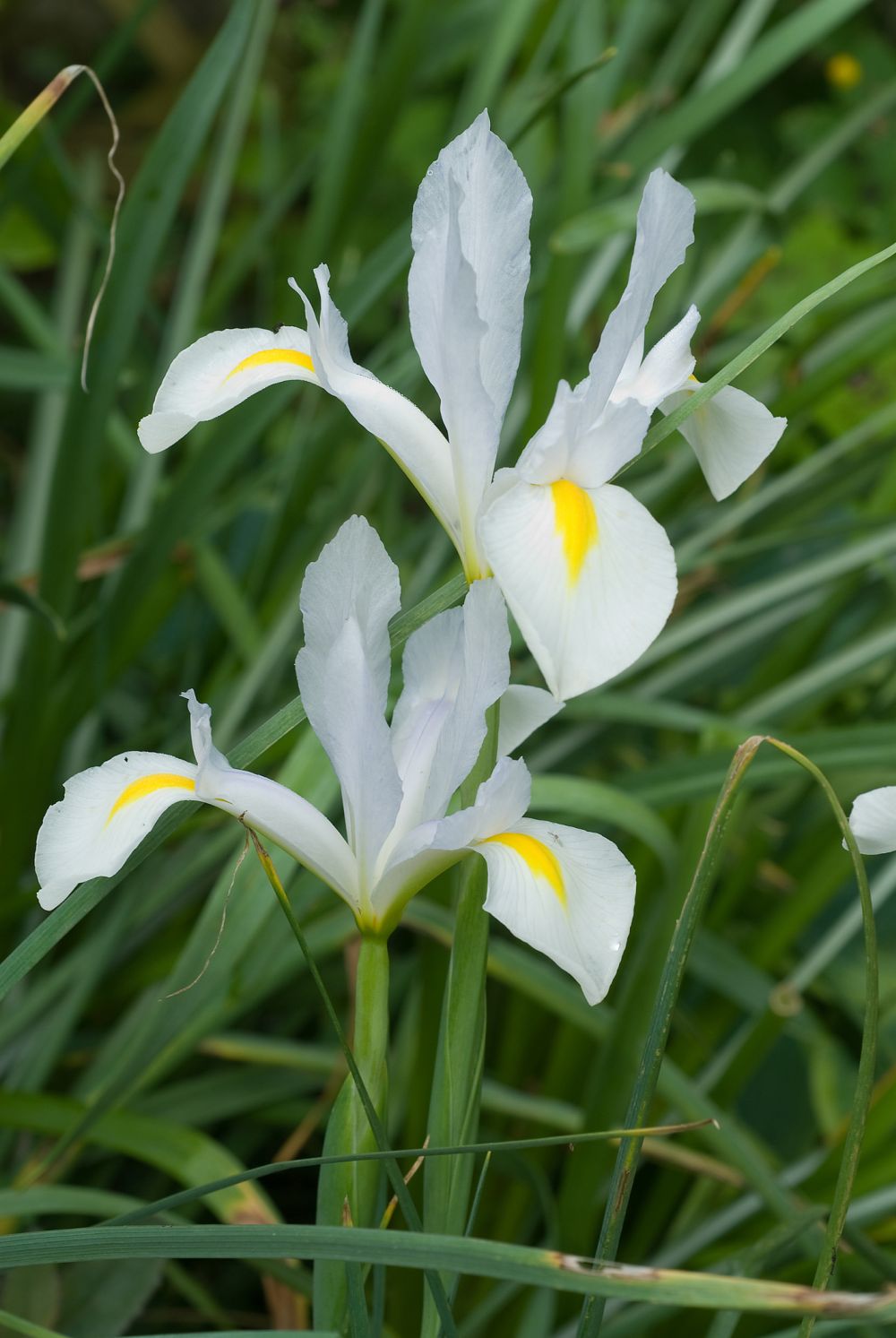
The Dutch have a vast experience with flowers. While tulips are their specialty, it turns out that the Dutch know 1 affair or two about irises likewise. And to prove that, they offer us the Dutch iris. The most hit feature of this variety is the various colors. The blooms range from white to golden, regal, and blue. Sometimes the petals volition take more than than one color.
Another fascinating property of the Dutch iris is that the petals are not always aligned. While you'll have three petals facing upwards, the other three will droop creating a dramatic temper. If yous're new to irises of whatsoever type, I recommend y'all start with this cultivar.
These hardy flowers can tolerate different types of soil and pH levels. From slightly acidic to neutral and a little element of group i, you can abound this beauty anywhere without facing any problems. Just make sure the soil is loamy and well-tuckered.
Caring for these flowers is easy besides. To prevent the cultivars from producing seeds, deadhead the flowers regularly. Afterward the finish of the blooming season, remove the dried leaves and let the found go fallow throughout the fall and wintertime. Perennial Dutch irises ordinarily come back to life in the spring. They are suitable for zones 5 to 9 and bloom between late spring and early summertime. The boilerplate plant grows to 24 inches high. Plant them in full lord's day or partial shade.
German Iris
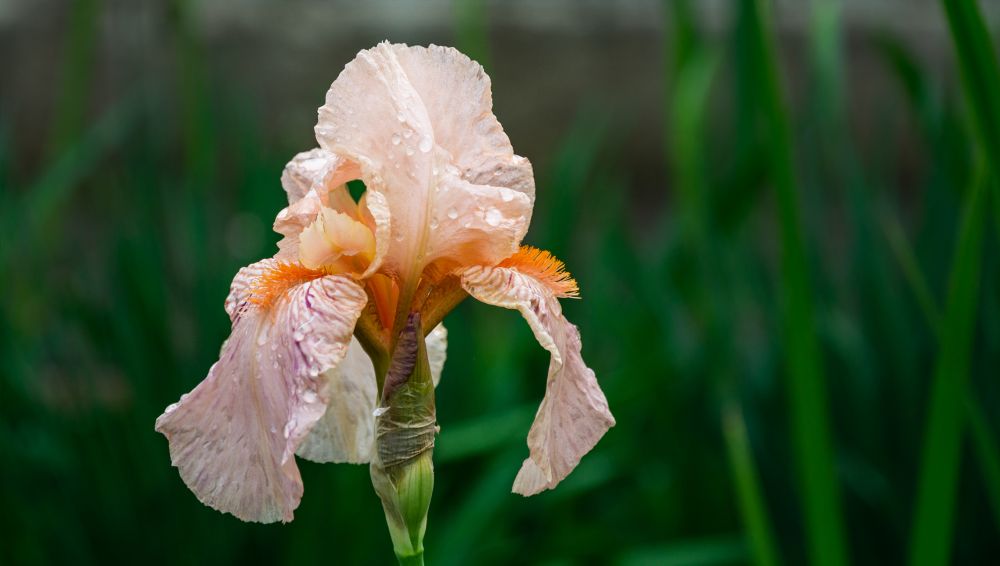
Not to exist outdone, the Germans came upwardly with their ain iris cultivar which naturally they named after themselves. But in some gardening circles, these cultivars are too known as disguised irises. The reason for the mysterious name is that each bloom has 4 drooping petals at the bottom that look like a beard from a certain angle. Whatever name you like to call it, this cultivar never fails to astonish with its variety of colors and hues.
While some flowers tin can have solid colors such as white, pink, yellowish, or majestic, others volition take different hues of these colors. And so you tin create a row of purple shades next to i with pink hues and so on. The landscaping options here are practically limitless.
German iris cultivars are suited for zones 4 to nine since they are more than cold tolerant than their Dutch counterparts. They are too belatedly bloomers and the first flower volition sally in mid-spring. Simply don't write them off one time the last blossom has faded. Not so fast. The German iris has the ability to rebloom former in the late summer.
The average plant grows between 20 to 40 inches tall and it loves full lord's day. If you alive in a warm zone where the afternoon sun becomes too fierce, yous might want to offer the plants some shade. It will protect the foliage from called-for and the flowers fading earlier their time. You tin grow information technology in any type of soil from clay to sandy or loamy. As long equally the soil is well-drained and sufficiently fertile, the iris is happy to abound year later on yr.
Dwarf Iris
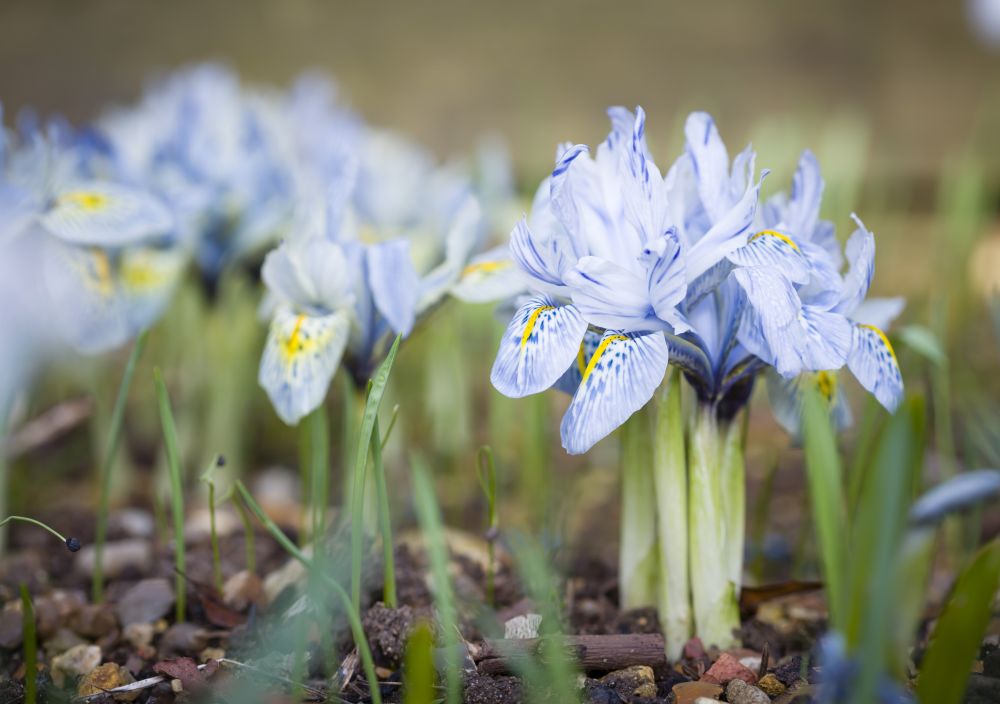
Equally the proper noun implies the dwarf iris is a diminutive plant that doesn't exceed half dozen inches. Sometimes an exceptionally alpine dwarf iris grows to 8 inches simply that's rare. What this means to you is that it'southward the right cultivar to abound in your balustrade or in a pot on a window sill. No thing how pocket-size your garden is, the dwarf iris is not very picky.
Yous can grow this cultivar in zones 4 to 9 and it requires half-dozen hours of total lord's day every twenty-four hour period. So make sure to place information technology near a window facing the west or south. The dwarf iris is not simply express in size merely also in color varieties likewise. The flower blooms either in purple or bluish hues. But don't let that colour selection limitation put y'all off. These cultivars take a lot going for them that makes up for their lack of color options.
Ane of those properties is their early blooming engagement. The dwarf cultivars will open upwards in the late winter long earlier any other iris has even shown any signs of life. And when they open they dazzle with the patterns they create. First, there volition be three large petals stealing the evidence. Supporting them are iii less prominent petals that human activity equally a side boot to the stars of the show.
Found these bulbs in the fall and choose loamy and well-drained soil for best results. Don't exit fading flowers on the plant since they take upward a lot of precious resources and cease new flowers from growing. Deadhead the flowers every bit presently equally they enter the seed production stage.
Louisiana Iris
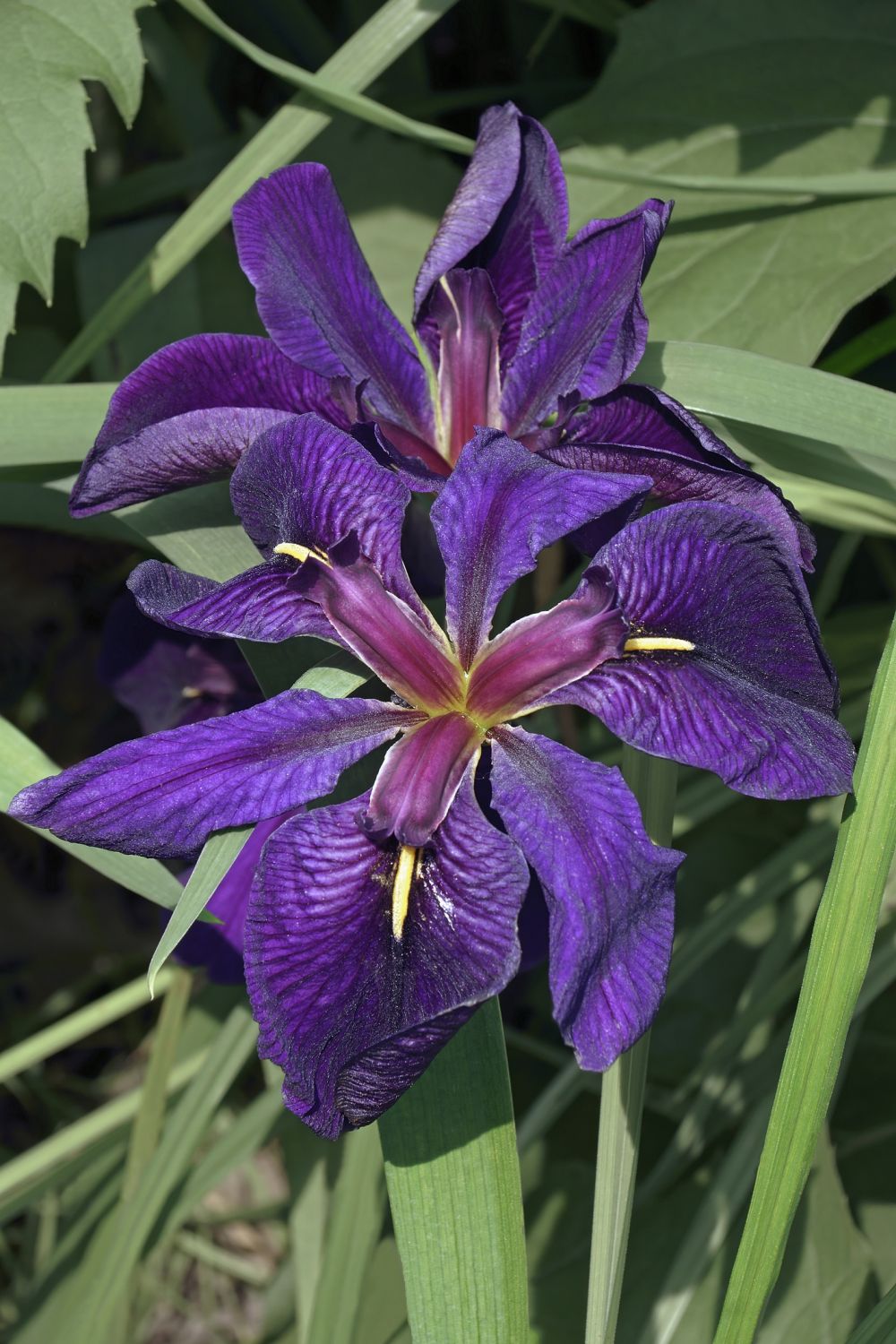
Then far we have been reviewing iris cultivars that can tolerate warm zones up to zone ix. But what if you lot live in zone 10 for example? Does that mean that irises are off-limits in your garden? Non at all. The Louisiana iris is here to save the day.
As beardless types, the Louisiana has a loftier tolerance for loftier temperatures and humidity levels. Ane drawback to that tolerance is that the flowers are late bloomers. You'll go your starting time iris sometime in the middle of the summer. The flowers come in ane color choice, purplish-cherry-red. Simply to sweeten the deal for y'all, each flower has a combination of colors. The five outer and more than prominent petals are purple while the three petals in the middle are red with some yellow shades. And then even though you cannot create a multi-colored floral arrangement from it, the ravishing flowers are undoubtedly the centre of the floral piece.
You tin can grow these lovely irises in humid conditions forth the side of ponds and water streams or in drier atmospheric condition. They are hardy and tin tolerate different conditions. I thing they cannot tolerate though is dry soil. Drought is the number one enemy of these cultivars. So maintain moist soil throughout the growing and flowering seasons until the found goes dormant in the mid-autumn.
Found the rhizomes in the bound and watch them bloom in the kickoff flavour. They boilerplate around 36 inches tall and require at least eight hours of sunlight every solar day. And similar the other iris cultivars, you should remove the fading flowers to permit new flowers to flower.
Japanese Iris
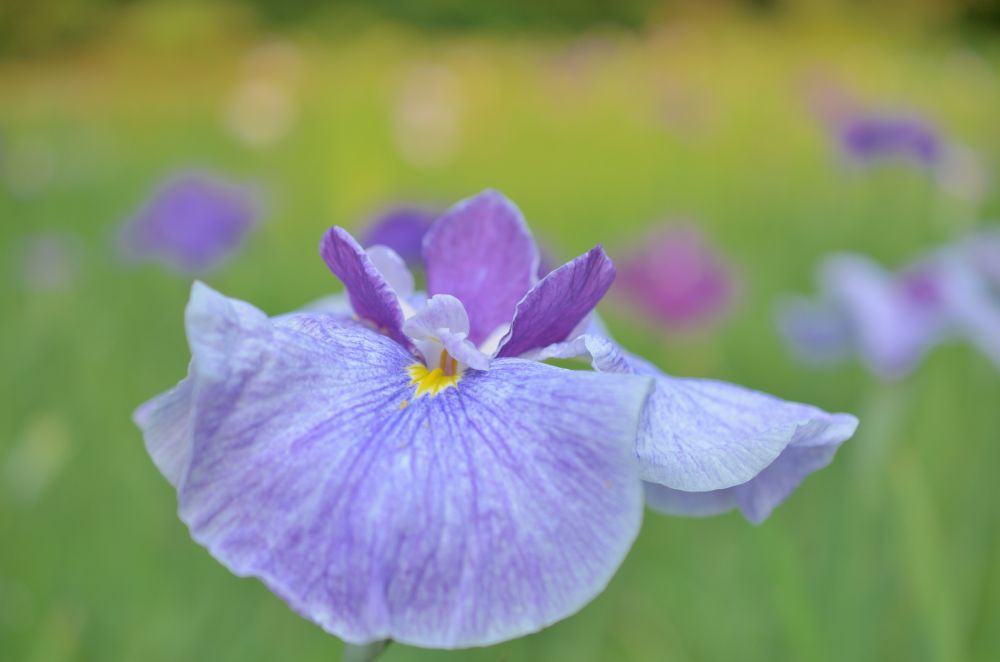
Japanese flowers are known for their dreamy and delicate colors. Information technology'southward like an artist paints every flower with watercolors. The Japanese iris is no different. The variegated petals shimmer with pink, blue, yellowish, and white hues. Y'all might fifty-fifty call them showboats. They certainly get your attending with their large blooms.
These cultivars dear moist soil so much, they often grow near ponds and lakes. Yous tin plant the rhizomes in the bound and expect the flowers to open up in the early summer. Japanese irises don't have the aforementioned tolerance for heat as the Louisiana cultivar and grow best in zones 4 to 9. In warm zones when the weather gets too dry, yous'll need to protect the cultivars from the afternoon sun.
Some other catch with these flowers is that they have a low tolerance for drought. In the summit of summer, you might need to water them every twenty-four hour period just to keep the soil moist enough. This is especially true if you grow these grandstanding blooms in containers. The soil in pots dries out faster than in the garden. So watering becomes a daily chore.
The boilerplate cultivar grows between 24 to 48 inches high making it easy to grow in containers equally well as outdoors. It thrives in full sun merely fractional shade is needed in hot and dry out climates. Make certain the soil drains well to foreclose waterlogging.
Source: https://www.diys.com/iris-types-and-varieties/
0 Response to "Iris Types And Varieties - Different Iris Types To Grow In The Garden"
Enviar um comentário